Google vs Microsoft: Professional Cybersecurity Certification
- Abtsega
- Application, Data
- September 15, 2021
Table of Contents
Introduction:
These days Cybersecurity is more critical than ever. But with so many courses and certifications available, how do you choose the right one? Over the past few months, I’ve completed two of the most renowned cybersecurity certifications: the Google Cybersecurity Professional Certificate and the Microsoft Cybersecurity Analyst Professional Certificate. My goal was simple: compare these two giants and determine which one offered the best learning experience. Spoiler alert—it’s not just about choosing one; it’s about understanding both.
The Power of Comparison in Learning
Learning is most effective when you can view a topic from multiple angles. By comparing the structures, content, and methodologies of these two certifications, I was able to reinforce my understanding and gain insights that I might have missed if I had only taken one course. Whether you’re a beginner or an experienced professional, this comparison can help you decide which path aligns with your learning style and career goals.
Course Structures and Content Breakdown
Google Cybersecurity Professional Certificate:
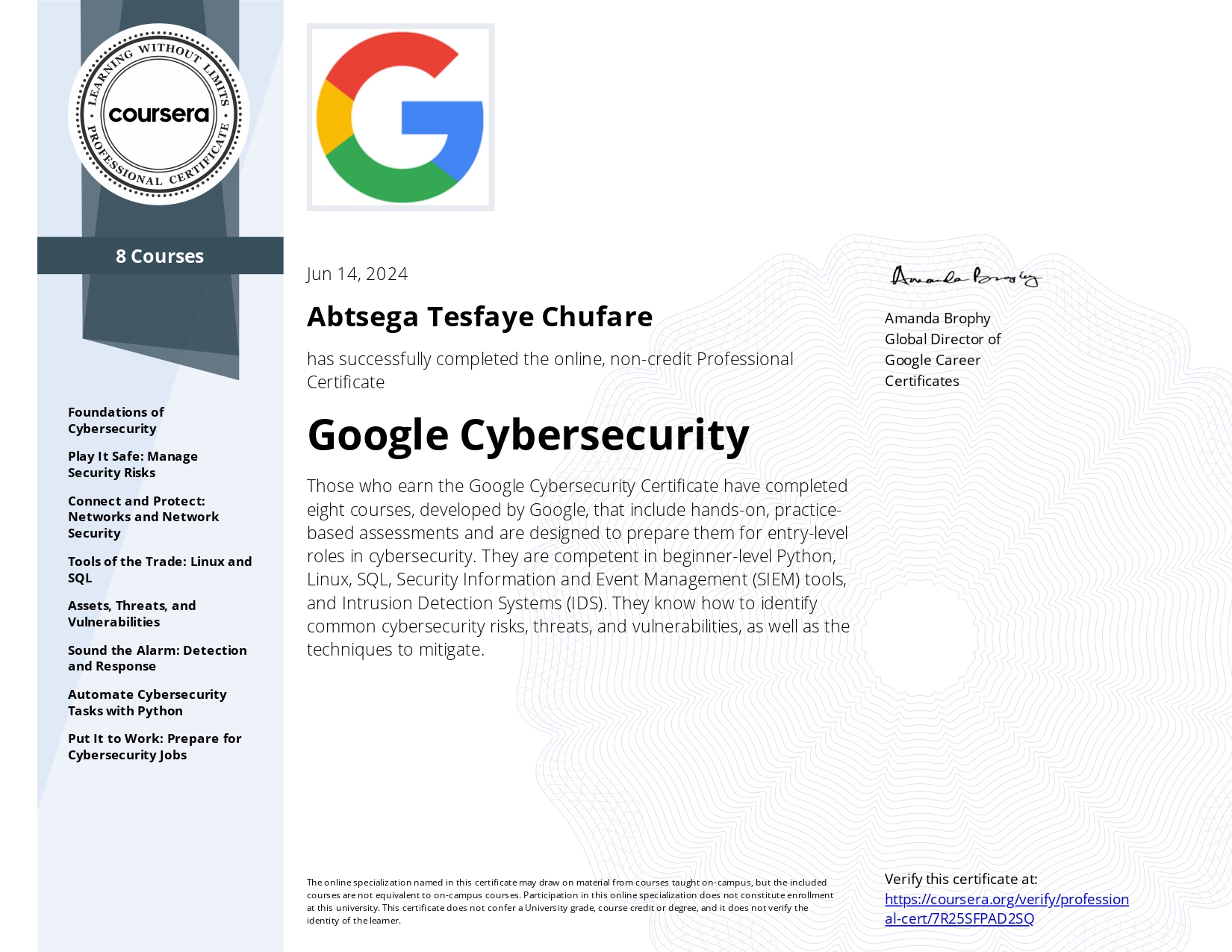
The Google course is designed to be beginner-friendly, with a strong focus on foundational concepts. It covers topics like network security, incident response, and threat detection. Hands-On Labs: Google’s emphasis on practical labs allows learners to apply what they’ve learned in real-world scenarios, which is crucial for mastering cybersecurity skills. Certifications: Completing the Google course earns you a badge that’s recognized across industries, particularly for roles in IT support and security.
Introduction to Cybersecurity: Covers the basics of cybersecurity, including the CIA triad (Confidentiality, Integrity, Availability) and common threats like phishing and malware.
Network Security & Database Vulnerabilities: Focuses on securing networks, identifying and mitigating vulnerabilities, and protecting sensitive data.
Incident Response & Detection: Teaches how to detect security breaches and respond to incidents, using tools like Wireshark and Splunk.
Cybersecurity Analytics & Operations: Explores how to monitor and analyze security data to prevent and respond to threats, utilizing SIEM (Security Information and Event Management) systems.
Microsoft Cybersecurity Analyst Professional Certificate:
The Microsoft course dives deeper into specific tools and technologies, such as Azure Security, compliance management, and identity protection. Technical Focus: Microsoft’s course is more technical, with a focus on using Microsoft tools and platforms to secure environments. It’s ideal for those looking to work with Microsoft’s ecosystem. Certifications: The certificate aligns closely with the skills needed for the Microsoft Certified: Security, Compliance, and Identity Fundamentals exam, giving you a clear pathway to further Microsoft certifications.
Security, Compliance, and Identity Fundamentals: Introduces key concepts in security, compliance, and identity management, focusing on Microsoft Azure.
Threat Protection Using Microsoft Defender: Provides hands-on experience with Microsoft Defender, learning how to protect against advanced threats.
Azure Security Center Implementation: Focuses on securing Azure environments using Azure Security Center and best practices for cloud security.
Managing Identity and Access: Teaches how to manage identities and control access within an organization using Azure Active Directory, emphasizing the Zero Trust model.
Technical Skills and Tools
Both certifications cover a wide range of tools and technologies, but they each have their specialties: Google: Emphasizes open-source tools and general security practices that can be applied across different platforms. Microsoft: Focuses on Azure and Microsoft-specific tools, making it a great choice if you plan to work in an environment that uses these technologies. Section 4: The Learning Experience
Google: The course is designed for a broad audience, making it accessible to those new to cybersecurity. The learning path is clear and structured, with ample support along the way. Microsoft: The Microsoft course, while also accessible to beginners, quickly ramps up in complexity, especially in the technical modules. It’s a bit more challenging but offers a rewarding experience for those who are up for it. Section 5: Which One Should You Choose?
If you’re new to cybersecurity: The Google course offers a gentler introduction, making it ideal for those just starting their journey. If you’re looking to specialize: The Microsoft course provides a deep dive into specific tools and platforms, making it a great choice for those looking to work in Microsoft-centric environments.
The Learning Experience
Google: The Google cybersecurity course is designed for a broad audience, making it accessible to those new to cybersecurity. The learning path is clear and structured, with ample support along the way. Typically, this course can be completed in about 3-6 months, depending on your pace. However, the actual time required varies, as it largely depends on how much time you can dedicate to studying and practicing each week.
Microsoft: The Microsoft course, while also accessible to beginners, quickly ramps up in complexity, especially in the technical modules. It’s a bit more challenging but offers a rewarding experience for those who are up for it. On average, students might take 4-8 months to finish this course, but again, the time required is highly dependent on your personal commitment and prior experience. For those willing to put in the effort, the course can be completed sooner, while others may take more time to fully grasp the material.
Which One Should You Choose?
If you’re new to cybersecurity: The Google course offers a gentler introduction, making it ideal for those just starting their journey. It’s designed to build a strong foundational understanding without overwhelming you with complex concepts early on. This course is perfect if you’re looking for a structured, step-by-step learning path that gradually introduces key cybersecurity principles.
If you’re looking to specialize: The Microsoft course provides a deep dive into specific tools and platforms, making it a great choice for those looking to work in Microsoft-centric environments. If you’re aiming to develop skills that are directly applicable to enterprise environments, particularly where Microsoft products like Azure and Windows Server are prevalent, this course will equip you with the technical expertise you need.
If you prefer a broad, multi-vendor approach: Google’s course offers a broader view of cybersecurity practices, not tied to a specific vendor. This is beneficial if you’re interested in understanding general cybersecurity concepts that apply across various platforms and tools. It’s a solid choice if you want to keep your career options open and not be tied to a single ecosystem.
If you need flexibility in learning: Both courses offer flexibility, but Google’s course might be better suited for those who prefer a slightly more relaxed pace, with content that can be more easily adapted to different learning styles. The course design accommodates a variety of learners, from visual to hands-on, making it easier to engage with the material in a way that suits you.
Conclusion:
Both the Google and Microsoft cybersecurity certifications offer valuable knowledge and skills. Your choice should depend on your current level of expertise, your career goals, and the specific tools and environments you plan to work with. But why choose just one? Embrace the power of comparison and explore both—it’s the best way to learn and grow in this dynamic field.
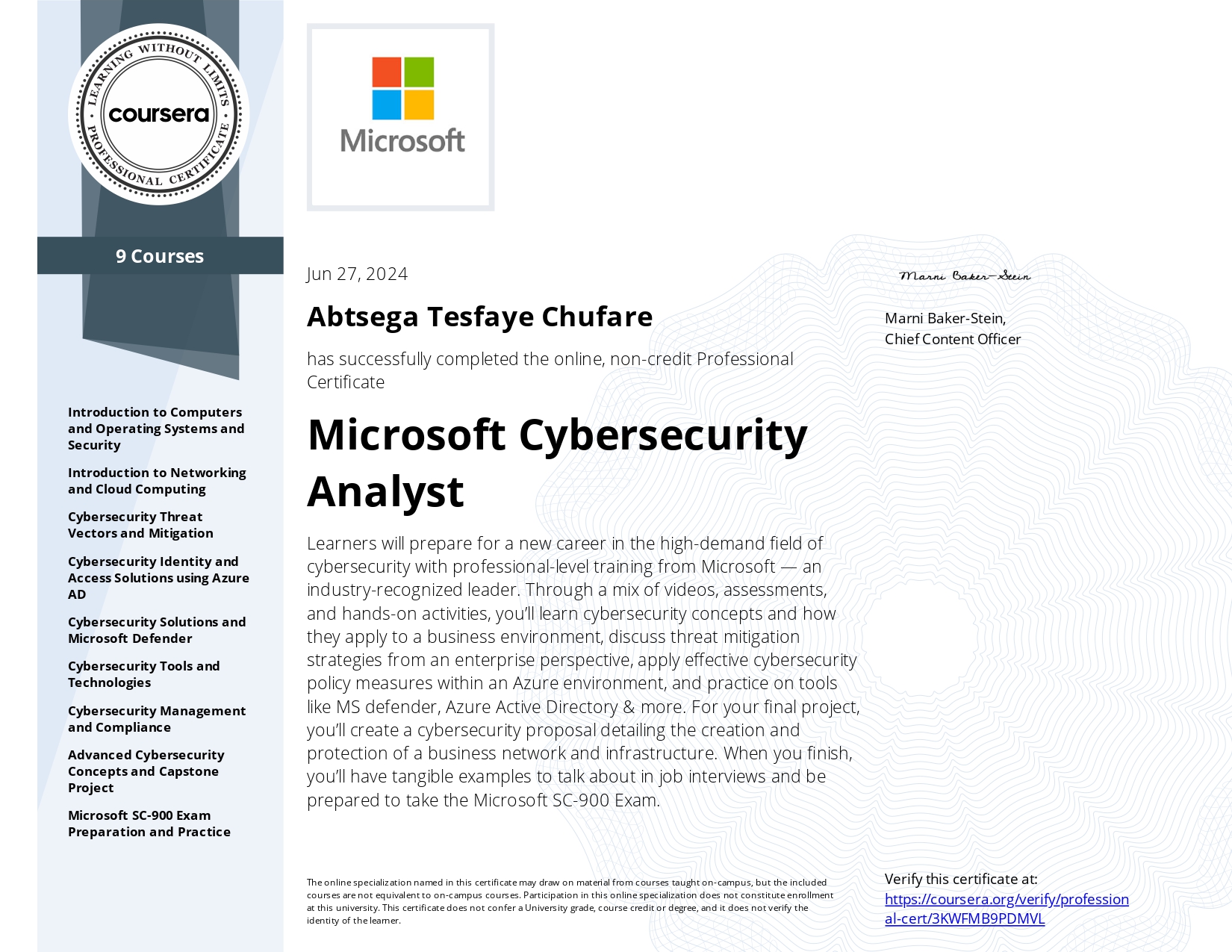
To access both the courses:
https://www.coursera.org/professional-certificates/google-cybersecurity
https://www.coursera.org/professional-certificates/microsoft-cybersecurity-analyst
To access my Credly account:
https://www.credly.com/users/abtsega-tesfaye-chufare.b9c99beb